

MARKET COMMENTARY
Technology Provides a Port in the Storm
10월 07, 2026
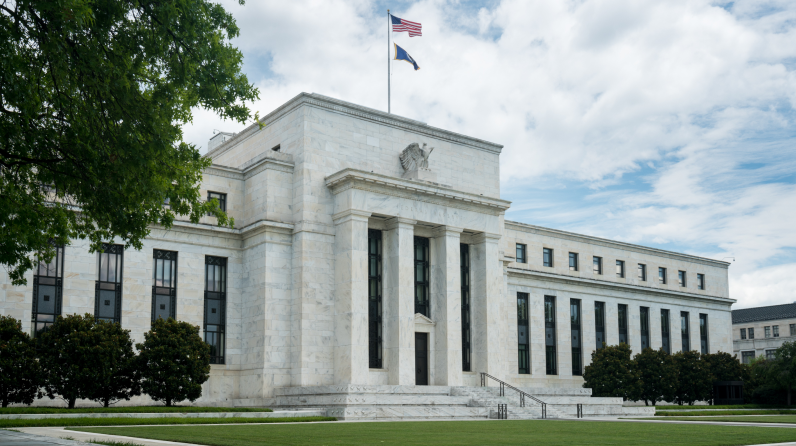
We've adjusted our rate view with our base case now including one additional hike in December, with the Fed then holding at 4.0%-4.25% thereafter.
As expected, the Federal Open Market Committee (“FOMC”) increased the fed funds target rate to 3.75% to 4.00%, with all voters in favor; this marks the first interest rate hike since 2023. The brief statement cited the commitment to the Fed’s dual mandate and acknowledged that while uncertainty remains, “domestic spending has been resilient.” The statement reiterated the 2% inflation goal and justified the decision based on both continued elevated inflation and a steady unemployment rate.
The Fed also updated its economic projections reflecting both the continued growth of the economy as well as the increased pricing pressures that precipitated the move. The FOMC anticipates GDP of +2.3% for 2026 and an acceleration to +2.4% in 2027, up from +2.2% and +2.3%, respectively. In addition, the unemployment rate is forecasted to settle at 4.1% both this year and next, down from 4.3% in June. Most importantly, core PCE was previously penciled in at +3.3% for 2026 and was marked up to +3.4% (a sharp increase over the March estimate of +2.7%), reflecting the upgraded growth forecasts, continued high energy prices, and the passthrough of AI-related capital expenditure to goods prices. As in June, the result was an increasingly hawkish dot plot, with rates now expected to close both 2026 AND 2027 at 4.1%, with the first hint of a cut coming in 2028. Perhaps more importantly, four respondents see upside to that 4.1% for 2027, implying that the Fed could be forced to do even more than anticipated in the first half of next year.
The press conference further amplified the narrative set forth in the projections, despite Fed Chair Kevin Warsh’s lack of participation in those projections. He framed the decision as a removal of “a dose of accommodation” and cited the continued strength of the U.S. economy, ongoing geopolitical uncertainty, and the lack of timely progress in bringing inflation down to the 2% target as the justification for the move. Specifically, as it relates to inflation, Warsh noted the number of categories for which prices are increasing in excess of 3%; this emphasis on diffusion within the underlying data potentially points to the need for a more nuanced assessment of the diverse drivers of inflation and speaks to the challenge of relying on single data points to determine the future Fed path.
As it relates to the state of the economy, Warsh reflected that this week’s meetings were replete with optimism and that recent data is pointing to an acceleration in economic activity. He noted that U.S. labor markets remain strong, with job openings and weekly hours higher, while jobless claims are consistent in his view with a full employment scenario. He also believes that while the Fed is admittedly becoming more restrictive, the dual mandates of price stability and full employment do not need to operate at “cross purposes” over the medium-term. Finally, when asked to opine on the recent move higher in the 10-Year Treasury yield, Warsh pointed to economic strength, the competition for capital given a surge in corporate issuance, and geopolitics – not fiscal concerns, surprisingly, especially given U.S. Treasury Secretary Scott Bessent’s recent comments around the rise in the long end of the curve.
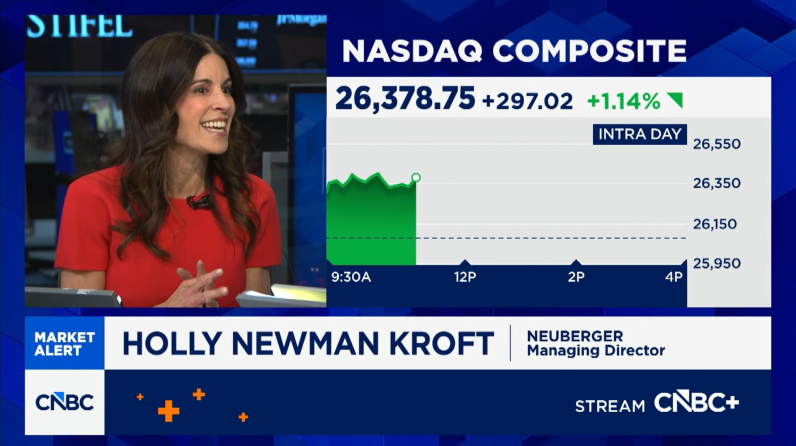
Stocks were modestly lower, and short yields higher, following the press conference. While the equity markets were anticipating the decision, Warsh’s emphasis on working to achieve price stability in a “timelier fashion” was unsettling for equity investors, who had likely anticipated that Warsh would strike a more balanced tone. In addition, the updated projections create a greater level of uncertainty for 2027 – especially given the one-two punch of higher growth coupled with a steady unemployment rate.
The primary takeaway from today’s meeting is that the Fed is “serious” about returning to its 2% inflation target and delivering price stability to the U.S. economy. The challenge is how effective interest rate policy can be in alleviating the likely sources of stickier inflation as we move into 2027 – namely, higher energy prices (and the eventual passthrough of those prices) and AI induced supply-demand mismatches. Higher borrowing costs for U.S. consumers will likely be difficult to digest and could further depress activity in housing and dampen discretionary spending. While one rate hike is not likely to translate into meaningfully lower economic activity, should the economy continue to strength and further drive pricing pressures, this may mark the beginning of a longer hiking cycle.
As such, we have adjusted our view following the announcement and press conference; our base case is that the Fed will hike rates in December and then hold at 4.0% to 4.25% thereafter. We believe pricing for broader categories such as shelter will continue to trend lower, acting as an important offset to the supply side challenges summarized above, but acknowledge a modestly higher risk represented by elevated energy prices. We recognize the continued strength of the global economy, however, and remain constructive on global equities. We anticipate that volatility could remain elevated as we approach the midterm elections, and we would take advantage of that volatility to position ahead of what is likely to be another strong earnings quarter for global companies.




IMPORTANT INFORMATION:
This material is provided for informational purposes only and nothing herein constitutes investment, legal, accounting or tax advice, or a recommendation to buy, sell or hold a security. This material is general in nature and is not directed to any category of investors and should not be regarded as individualized, a recommendation, investment advice or a suggestion to engage in or refrain from any investment-related course of action. Any views or opinions expressed may not reflect those of the firm as a whole. Neuberger products and services may not be available in all jurisdictions or to all client types. Diversification does not guarantee profit or protect against loss in declining markets. Investing entails risks, including possible loss of principal. Investments in private equity are speculative and involve a higher degree of risk than more traditional investments. Investments in private equity are intended for sophisticated investors only. Unless otherwise indicated, returns shown reflect reinvestment of dividends and distributions. Indexes are unmanaged and are not available for direct investment. Investing entails risks, including possible loss of principal. Past performance is no guarantee of future results.
Portfolio positioning views expressed herein are those of Neuberger’s Wealth Investment Group, which may include those of the Neuberger’s Asset Allocation Committee. Asset allocation and positioning views are based on a hypothetical reference portfolio. The Wealth Investment Group analyzes market and economic indicators to develop asset allocation strategies. The Wealth Investment Group works in partnership with the Office of the CIO. The Wealth Investment Group also consults regularly with portfolio managers and investment officers across the firm. The Asset Allocation Committee is comprised of professionals across multiple disciplines, including equity and fixed income strategists and portfolio managers. The Asset Allocation Committee reviews and sets long-term asset allocation models, establishes preferred near-term tactical asset class allocations and, upon request, reviews asset allocations for large, diversified mandates. Asset Allocation Committee members are polled on asset classes and the positional views are representative of an Asset Allocation Committee consensus. The views of the Asset Allocation Committee and the Wealth Investment Group may not reflect the views of the firm as a whole and Neuberger advisers and portfolio managers may take contrary positions to the views of the Asset Allocation Committee or the Wealth Investment Group. The Asset Allocation Committee and the Wealth Investment Group views do not constitute a prediction or projection of future events or future market behavior. Defensive positioning generally means an underweight bias on allocations to risk assets such as equities and alternatives. Positioning views may change over time without notice and actual client positioning may vary significantly. Discussion of yield characteristics or total returns of different asset classes are for illustrative purposes only. Such asset classes, such as equities and fixed income, may have significantly different overall risk-return characteristics which should be consider before investing.
The information in this material may contain projections, market outlooks or other forward-looking statements regarding future events, including economic, asset class and market outlooks or expectations, and is only current as of the date indicated. There is no assurance that such events, outlook and expectations will be achieved, and actual results may be significantly different than that shown here. The duration and characteristics of past market/economic cycles and market behavior, including any bull/bear markets, is no indication of the duration and characteristics of any current or future be market/economic cycles or behavior. Information on historical observations about asset or sub-asset classes is not intended to represent or predict future events. Historical trends do not imply, forecast or guarantee future results. Information is based on current views and market conditions, which will fluctuate and may be superseded by subsequent market events or for other reasons.
Discussions of any specific sectors and companies are for informational purposes only. This material is not intended as a formal research report and should not be relied upon as a basis for making an investment decision. The firm, its employees and advisory accounts may hold positions of any companies discussed. Nothing herein constitutes a recommendation to buy, sell or hold a security. It should not be assumed that any investments in securities, companies, sectors or markets identified and described were or will be profitable. Investment decisions and the appropriateness of this content should be made based on an investor's individual objectives and circumstances and in consultation with his or her advisors.
Neuberger Investment Advisers LLC is a registered investment adviser.
The “Neuberger” name and logo are registered service marks of Neuberger Berman Group LLC.