NEWS AND INSIGHTS | INSIGHTS
Concentrated Stock Risk: Working From All Angles
一月 29, 2026

Concentrated, low-basis stock positions often represent not only portfolio risk but planning challenges given their potential tax liability. We explore an array of strategies to consider.
Managing your investments can become particularly nuanced when you face the challenge of addressing substantial, low-basis concentrated stock positions—assets that may have fueled significant wealth accumulation, but now present heightened portfolio risk and potentially onerous tax implications.
Many experts have highlighted the risk of these positions, showing the number of stocks that underperform the broad market over the long term or the drop in returns many stocks eventually experience; however, finding the best solutions to address these risks can be far from easy. In this article, we outline the issues and highlight various potential approaches.
Rarely can a single solution solve a problem as complex as a low-basis concentrated stock holding. We see two distinct, but related, issues: risk from the size of the position and tax liability based on imbedded gains. It is the tax issue that may limit flexibility in diversifying away from the position.
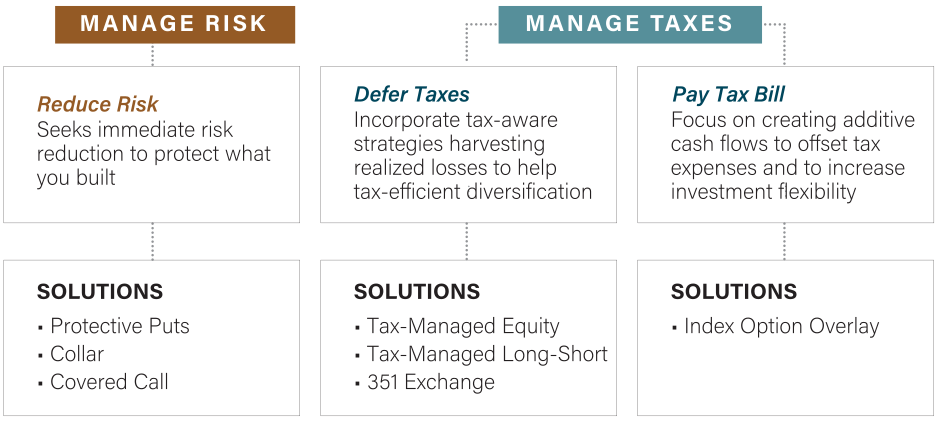
Not all approaches are created with the same goal, nor do they share the same time horizon. The path to diversifying should therefore be tailored to your individual risk tolerance, objectives and time horizon. We like to view the universe of solutions through a dual lens of risk and tax management:
This framework allows you to zero in on the right solution—or combination of solutions—based on where you are in your diversification journey.
Source: Neuberger.
Below are overviews of various strategies that can potentially address concentrated stock positions within a portfolio. Note that their use, whether in isolation or together, should closely align to your individual goals.
Covered-Call Writing
For those willing to trade some potential upside in exchange for upfront cash premiums and less downside risk, covered-call writing can be an appealing solution. The strategy involves selling call options on the stock while retaining ownership of the underlying shares, allowing you to earn premium income. This income can help mitigate potential losses and enhance portfolio yield, especially for stocks with expectations of flat to moderately up returns.
Covered-call writing can also be a helpful tool for diversifying a concentrated position. While you can continue to participate in the stock return up to a certain price, if the stock rises above that price, it may be sold for that amount or “called away,” enabling you to reduce exposure at an appealing price point.
A customized approach to covered-call writing gives you the ability to tailor your investments to your specific goals. You can select how aggressively you would like to set income objectives, set exercise targets and even establish settlement processes based on your preferences.
Establishing a Collar
In some cases, while you may not want to sell your position, you may wish to narrow your potential return outcomes and/or protect against a major sell-off. A collar strategy can serve this purpose; it involves simultaneously purchasing a protective put option and selling a call option on the same stock. The protective put ensures that you can sell at a certain price, limiting potential losses if the stock’s value declines significantly. Meanwhile, the sale of the call option generates premium income that helps offset the cost of purchasing the put option, making the strategy more affordable, but capping potential gains.
A collar is particularly useful if you are seeking to manage risk without liquidating your position. It can provide peace of mind in volatile markets, with the knowledge that your stock’s value will not fall below a certain level. At the same time, it caps the upside potential, as you agree to sell the stock at a certain price if the stock rises above that level. This makes the collar a balanced strategy, ideal for those who prioritize risk reduction over maximizing gains.
Staged Selling and Tax-Loss Harvesting Through Tax-Managed Accounts
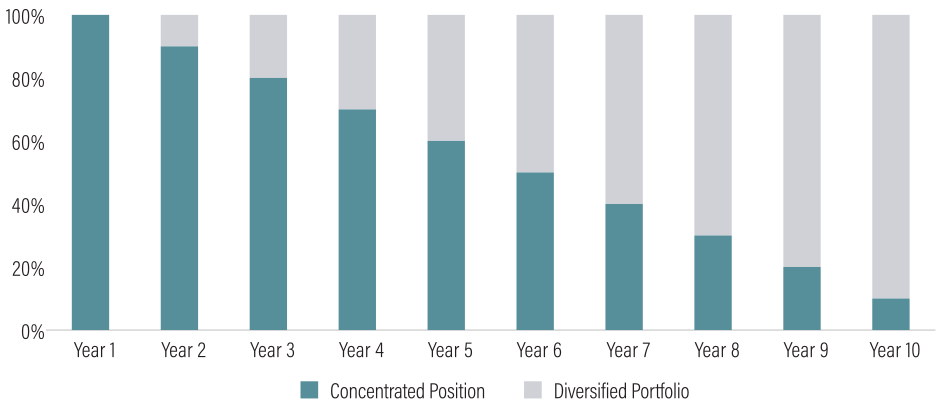
In our experience, the most common strategy for diversifying out of a low-basis, concentrated stock position is staged selling, where you gradually sell shares of a stock over a period of time rather than selling a large amount all at once. By spreading the sales across multiple tax years, you limit the tax payments to smaller amounts, and potentially lower tax rates, as opposed to triggering a higher tax rate on a large one-time sale. The result is a gradual diversification of the investment portfolio, slowly reducing the concentration risk.
The proceeds from these sales can then be used to help diversify your portfolio. One option may be to add to a public equity portfolio that employs systematic tax-loss harvesting. This is generally called “direct indexing,” but in practice can be used to track any benchmark, core exposure or active model. This provides immediate diversification as well as the ability to opportunistically realize losses over the remainder of the year to offset the realized gains from selling the stock—potentially reducing your tax bill.
Source: Neuberger.
Tax-Managed Long-Short
Tax-managed long-short strategies can also be a useful tool to address concentration issues. A long-short approach helps diversify out of a stock position while more aggressively addressing the tax implications of its sale. For example, in a “130/30” strategy, you take long positions equal to 130% of the portfolio’s value and short positions equal to 30%, resulting in a net exposure of 100%. By carefully managing these positions, you can reduce dependence on the concentrated stock and gain exposure to a broader range of investments.
A key advantage of this strategy is its ability to facilitate diversification without triggering immediate capital gains taxes from selling. Instead of liquidating the stock, you can use a margin account to add long exposure to complementary securities, while also going short with low or negative correlations to minimize overall portfolio risk. These short positions act as a hedge, reducing the portfolio’s overall exposure to the concentrated stock while enabling you to retain ownership of the stock for now, and to tax-efficiently diversify over time. Meanwhile, the long positions in other assets or sectors provide immediate diversification, helping to mitigate the risks associated with concentration.
This strategy incorporates tax efficiency into its design. By managing gains and losses strategically across the portfolio, you can also offset realized capital gains with losses from other positions, minimizing your overall tax liability. In addition, the premiums earned from short-selling or adjustments to the portfolio can create opportunities to rebalance without incurring immediate tax consequences.
351 Exchanges
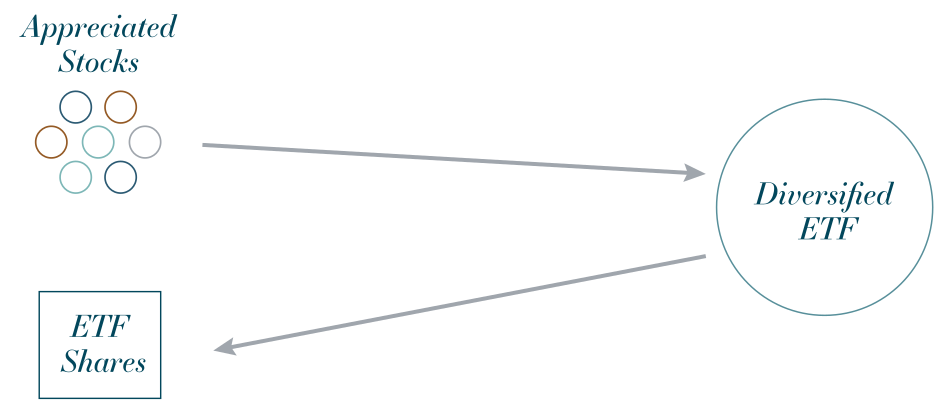
Exchange Traded Funds (ETFs) are often favored for their intraday liquidity, potential tax efficiency and applicability in estate planning. A Section 351 Separately Managed Account (SMA)-to-ETF exchange offers notable advantages by facilitating a tax-efficient transition of eligible securities into an ETF. With a 351 exchange, you transfer your existing investment into the ETF in exchange for shares of the ETF without any taxable event, with your cost basis carried over to the ETF position.
This approach enables diversification while deferring taxation on unrealized gains. By postponing taxes at the outset, you may reinvest those savings and potentially achieve long-term wealth accumulation through the power of compounding. You will recognize the gain only if you later sell an ETF at a price in excess of its cost basis.
By exchanging a concentrated position for a basket of diversified assets, you can reduce single-stock risk and improve the overall risk profile of your portfolio. A 351 exchange can also play a role in estate planning. By deferring taxes, you can potentially pass on a more diversified and tax-efficient portfolio to heirs, who may benefit from a step-up in basis at inheritance, further reducing future tax liability.
Source: Neuberger.
Index Option Overlay
An index option overlay offers an innovative way to create a tax-advantaged cash flow from the stock without altering its return profile. The cash can be used to pay the tax expense from staged sales of the position over time, helping to diversify through the outright reduction of the tax expense that was limiting portfolio flexibility.
The strategy accomplishes this by unlocking the value of the concentrated stock without the need for immediate liquidation or disruptive borrowing. At its core, the strategy employs “margin release,” allowing you to use the borrowing power of your concentrated position as collateral for an option overlay strategy. Importantly, this does not require going “on margin” or incurring the costs typically associated with borrowing.
In practice, we believe that a spectrum of solutions and timelines may be needed to serve those with low-cost basis positions. Clarification of your concerns surrounding risk, taxes and the time frame of diversification can help guide the potential blend of approaches. In our view, having a variety of strategies at your disposal can help maximize your chances of achieving an effective outcome for your taxable portfolio.
1A prepaid variable forward provides the investor with an upfront payment in exchange for delivering a variable number of shares in the future. Potential gains and losses can be limited, and capital gains tax may be deferred until the end of the contract.
This material is provided for informational and educational purposes only and nothing herein constitutes investment, legal, accounting or tax advice. This material is general in nature and is not directed to any category of investors and should not be regarded as individualized, a recommendation, investment advice or a suggestion to engage in or refrain from any investment-related course of action. Investment decisions and the appropriateness of this material should be made based on an investor’s individual objectives and circumstances and in consultation with his or her advisors. Information is obtained from sources deemed reliable, but there is no representation or warranty as to its accuracy, completeness or reliability. All information is current as of the date of this material and is subject to change without notice. The firm, its employees and advisory accounts may hold positions of any companies discussed. Any views or opinions expressed may not reflect those of the firm as a whole. Neuberger Berman products and services may not be available in all jurisdictions or to all client types.
This material may include estimates, outlooks, projections and other “forward-looking statements.” Due to a variety of factors, actual events or market behavior may differ significantly from any views expressed.
The application of Section 351 of the Internal Revenue Code involves complex tax considerations and may not be appropriate for all investors or situations. Clients should consult with their tax advisor, legal counsel, or other qualified professionals regarding their specific circumstances before undertaking any transaction involving a Section 351 exchange.
Options trading involves significant risk and is not suitable for all investors. You should carefully consider your financial objectives, experience level, and risk tolerance prior to investing. Consult with your financial advisor to determine whether options trading is appropriate for your individual circumstances.
Investing entails risks, including possible loss of principal. Investments in hedge funds and private equity are speculative and involve a higher degree of risk than more traditional investments. Investments in hedge funds and private equity are intended for sophisticated investors only. Indexes are unmanaged and are not available for direct investment. Past performance is no guarantee of future results.
Neuberger Berman Investment Advisers LLC is a registered investment adviser. The “Neuberger Berman” name and logo are registered service marks of Neuberger Berman Group LLC.