

MUNICIPAL BASIS POINTS
Smart Shopping: Focusing on Yield and Selection in a Mixed Environment
7월 24, 2026

A stabilizing labor market combined with persistent energy price pressures leaves the Fed little room to maintain an easing bias, with a shift to a neutral – and potentially restrictive – stance increasingly likely.
Marking the third straight month of meaningfully better-than-expected data, May non-farm payrolls increased by +176k ahead of expectations for a +88k print. There were also significant upward revisions to both March and April (+29k and +64k, respectively), reinforcing our view of a stabilizing labor market despite geopolitical headwinds.
May’s gains were broad-based, and reflecting not only areas of continued strength, but also a broad industrial inflection, driven in part by robust AI capital expenditure. Health care and social assistance, emphasizing the importance of these sectors in service of an increasingly aged demographic, were up +35k and +12k, respectively. Local government hiring was also a standout, adding +55k in May; this was supplemented by an additional +44k in education job gains. Construction, manufacturing, and mining, quarrying, and oil and gas exploration added a combined +29k for the month, with the latter benefiting from the disruption in the Middle East. The strongest sector was leisure and hospitality (+70k), where the typical seasonal uptick has been compounded by a desire to add staff ahead of the FIFA World Cup. The only real area of weakness remains financial services; the loss of -22k jobs in May marks the third straight month the sector has shed workers, perhaps a result of the effects of AI integration in these businesses.
The household survey reflected an upbeat tone as well. While the unemployment rate was steady at 4.3% and the participation rate remained under the 62% mark, the number of employed persons rose by +149k, with unemployed down -66k. In addition, the number of workers who identify as part time for economic reasons also fell by -137k. Average earnings rose by +0.3% month-over-month and +3.4% year-over-year, while average hours were steady at 34.3 – both solid and supportive of U.S. consumers’ ability to maintain current levels of spending, at least in the short-term.
The combination of a stabilized U.S. labor market and the threat of passthrough inflation due to persistently elevated energy prices leaves the Fed little latitude to maintain its easing bias. The question now becomes what the catalyst might be for the Fed to move from a neutral stance – which we expect to be telegraphed in the statement following the June 17 meeting – to a more restrictive stance. Admittedly, financial conditions have tightened as of late, even as the Fed has put further policy changes on hold. However, with stronger economic growth, driven by capital spending, the Fed may need to adopt a more restrictive posture than previously envisioned. While we are rightly concerned about another period of accelerating inflation – particularly given the mounting pressure the U.S. consumer is facing – we maintain our view that the fear of passthrough is overstated and that inflation will cool in the second half.
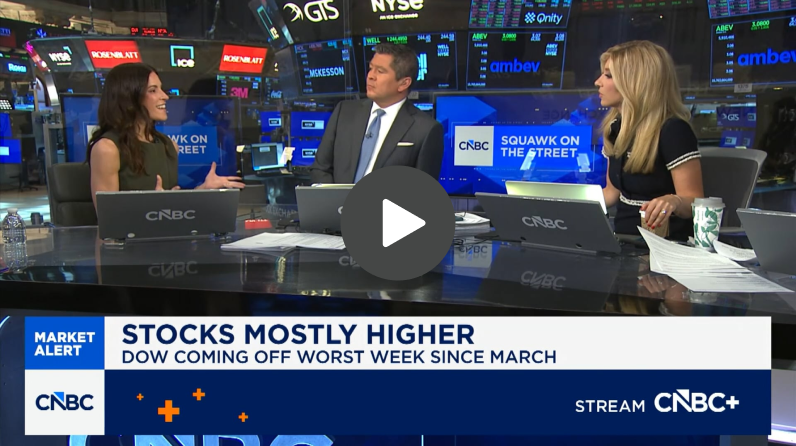
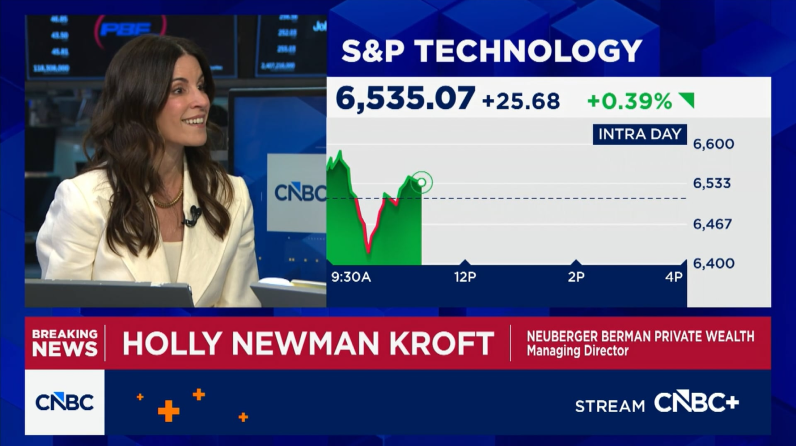
Both U.S. equity and bond markets responded negatively to today’s print. We believe the move higher in the short end of the U.S. yield curve represents an opportunity and intend to continue to take advantage of these knee-jerk reactions to data releases. In addition, U.S. large cap equities have experienced meaningful gains over the past two months, and while investors may harbor concerns about the potential for higher rates to hinder further gains, the combination of AI enthusiasm and broad-based earnings growth has been the fuel for this rally, and a modest move higher in yields is unlikely to prove a strong enough force to shift that momentum. That said, we are cautious as we look ahead to the next several weeks, anticipating that risk repositioning and the digestion of the SpaceX IPO could translate to higher volatility in the U.S. equity markets. Should this occur, we will look to reposition portfolios in alignment with long-term targets.




IMPORTANT INFORMATION:
This material is provided for informational purposes only and nothing herein constitutes investment, legal, accounting or tax advice, or a recommendation to buy, sell or hold a security. This material is general in nature and is not directed to any category of investors and should not be regarded as individualized, a recommendation, investment advice or a suggestion to engage in or refrain from any investment-related course of action. Any views or opinions expressed may not reflect those of the firm as a whole. Neuberger products and services may not be available in all jurisdictions or to all client types. Diversification does not guarantee profit or protect against loss in declining markets. Investing entails risks, including possible loss of principal. Investments in private equity are speculative and involve a higher degree of risk than more traditional investments. Investments in private equity are intended for sophisticated investors only. Unless otherwise indicated, returns shown reflect reinvestment of dividends and distributions. Indexes are unmanaged and are not available for direct investment. Investing entails risks, including possible loss of principal. Past performance is no guarantee of future results.
Portfolio positioning views expressed herein are those of Neuberger’s Wealth Investment Group, which may include those of the Neuberger’s Asset Allocation Committee. Asset allocation and positioning views are based on a hypothetical reference portfolio. The Wealth Investment Group analyzes market and economic indicators to develop asset allocation strategies. The Wealth Investment Group works in partnership with the Office of the CIO. The Wealth Investment Group also consults regularly with portfolio managers and investment officers across the firm. The Asset Allocation Committee is comprised of professionals across multiple disciplines, including equity and fixed income strategists and portfolio managers. The Asset Allocation Committee reviews and sets long-term asset allocation models, establishes preferred near-term tactical asset class allocations and, upon request, reviews asset allocations for large, diversified mandates. Asset Allocation Committee members are polled on asset classes and the positional views are representative of an Asset Allocation Committee consensus. The views of the Asset Allocation Committee and the Wealth Investment Group may not reflect the views of the firm as a whole and Neuberger advisers and portfolio managers may take contrary positions to the views of the Asset Allocation Committee or the Wealth Investment Group. The Asset Allocation Committee and the Wealth Investment Group views do not constitute a prediction or projection of future events or future market behavior. Defensive positioning generally means an underweight bias on allocations to risk assets such as equities and alternatives. Positioning views may change over time without notice and actual client positioning may vary significantly. Discussion of yield characteristics or total returns of different asset classes are for illustrative purposes only. Such asset classes, such as equities and fixed income, may have significantly different overall risk-return characteristics which should be consider before investing.
The information in this material may contain projections, market outlooks or other forward-looking statements regarding future events, including economic, asset class and market outlooks or expectations, and is only current as of the date indicated. There is no assurance that such events, outlook and expectations will be achieved, and actual results may be significantly different than that shown here. The duration and characteristics of past market/economic cycles and market behavior, including any bull/bear markets, is no indication of the duration and characteristics of any current or future be market/economic cycles or behavior. Information on historical observations about asset or sub-asset classes is not intended to represent or predict future events. Historical trends do not imply, forecast or guarantee future results. Information is based on current views and market conditions, which will fluctuate and may be superseded by subsequent market events or for other reasons.
Discussions of any specific sectors and companies are for informational purposes only. This material is not intended as a formal research report and should not be relied upon as a basis for making an investment decision. The firm, its employees and advisory accounts may hold positions of any companies discussed. Nothing herein constitutes a recommendation to buy, sell or hold a security. It should not be assumed that any investments in securities, companies, sectors or markets identified and described were or will be profitable. Investment decisions and the appropriateness of this content should be made based on an investor's individual objectives and circumstances and in consultation with his or her advisors.
Neuberger Investment Advisers LLC is a registered investment adviser.
The “Neuberger” name and logo are registered service marks of Neuberger Berman Group LLC.