

MARKET COMMENTARY
Technology Provides a Port in the Storm
October 07, 2026

The Fed is at an inflection point as risk‑management cuts wind down; although dispersion within the Committee may introduce uncertainty, the likely replacement of Chair Powell in May 2026 could also produce a more dovish tilt in the back half of the year.
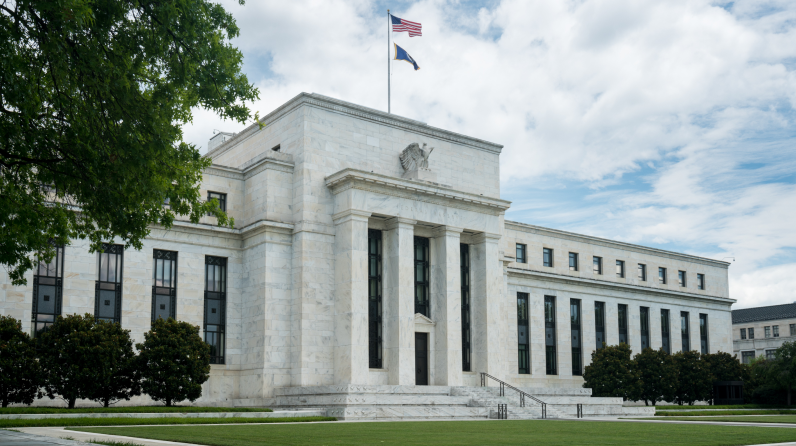
As widely expected, the Federal Open Market Committee (“FOMC”) announced that it lowered the fed funds target rate by 25 basis points to 3.50% to 3.75% following their December meeting. Joining Stephen Miran and Jeffrey Schmid in dissent this month was Austan Goolsbee, with Miran voting for a 50-basis point cut for the third straight meeting while Schmid and Goolsbee voted to maintain rates at their current level. In addition, the Fed wasted little time shifting from quantitative tightening to quantitative easing, announcing that as of December 12, it will buy $40 billion of T-bills a month to maintain reserves.
With data coming in late and potentially skewed on the back of the government shutdown, it was unsurprising that the Fed’s statement provided for additional latitude as the calendar turns to 2026, stating that as it relates to further rate cuts, “the Committee will carefully assess incoming data, the evolving outlook, and the balance of risks.” However, the quarterly update of economic projections pointed to an increase in growth expectations for 2026, from +1.8% to +2.3%, with unemployment expected at 4.4% and core PCE for 2026 to come in at +2.5% versus +2.6% in September’s estimate.
What was clear from the press conference is that the Fed is at an inflection point. While the risk management portion of the current rate cutting cycle is likely ending – we project one more interest rate cut in the first quarter of 2026 – there is meaningful dispersion on the Committee as to the best next step. Should the labor market continue to soften, the Fed could choose to become more accommodative, but stronger growth, even against a backdrop of cooler inflation, could be a hurdle for some members of the FOMC. Admittedly, with Fed Chair Jerome Powell expected to be replaced when his term ends in May 2026, there could be a more dovish tilt to the Fed in the back half of the new year – perhaps regardless of the state of the dual mandate.
In short, while the Fed’s path is uncertain, it’s leaning toward easing as inflation moderates, which should help growth and risk assets. We remain constructive on equities, favoring cyclicals and quality growth. We also believe there will be continued broadening in equity performance and suggest looking outside of U.S. large cap to small cap and ex-U.S. exposures for 2026. In fixed income, we recommend moving out of cash and ultra-short bonds, extending duration, and adding credit as appropriate. Finally, within private markets, we favor strategies providing liquidity such as secondaries and co-investments ahead of normalizing distributions and a potential uptick in M&A in the back half of 2026.




IMPORTANT INFORMATION:
This material is provided for informational purposes only and nothing herein constitutes investment, legal, accounting or tax advice, or a recommendation to buy, sell or hold a security. This material is general in nature and is not directed to any category of investors and should not be regarded as individualized, a recommendation, investment advice or a suggestion to engage in or refrain from any investment-related course of action. Any views or opinions expressed may not reflect those of the firm as a whole. Neuberger Berman products and services may not be available in all jurisdictions or to all client types. Diversification does not guarantee profit or protect against loss in declining markets. Investing entails risks, including possible loss of principal. Investments in private equity are speculative and involve a higher degree of risk than more traditional investments. Investments in private equity are intended for sophisticated investors only. Unless otherwise indicated, returns shown reflect reinvestment of dividends and distributions. Indexes are unmanaged and are not available for direct investment. Investing entails risks, including possible loss of principal. Past performance is no guarantee of future results.
Portfolio positioning views expressed herein are those of Neuberger Berman’s Private Wealth Investment Group, which may include those of the Neuberger Berman’s Asset Allocation Committee. Asset allocation and positioning views are based on a hypothetical reference portfolio. The Private Wealth Investment Group analyzes market and economic indicators to develop asset allocation strategies. The Private Wealth Investment Group works in partnership with the Office of the CIO. The Private Wealth Investment Group also consults regularly with portfolio managers and investment officers across the firm. The Asset Allocation Committee is comprised of professionals across multiple disciplines, including equity and fixed income strategists and portfolio managers. The Asset Allocation Committee reviews and sets long-term asset allocation models, establishes preferred near-term tactical asset class allocations and, upon request, reviews asset allocations for large, diversified mandates. Asset Allocation Committee members are polled on asset classes and the positional views are representative of an Asset Allocation Committee consensus. The views of the Asset Allocation Committee and the Private Wealth Investment Group may not reflect the views of the firm as a whole and Neuberger Berman advisers and portfolio managers may take contrary positions to the views of the Asset Allocation Committee or the Private Wealth Investment Group. The Asset Allocation Committee and the Private Wealth Investment Group views do not constitute a prediction or projection of future events or future market behavior. Defensive positioning generally means an underweight bias on allocations to risk assets such as equities and alternatives. Positioning views may change over time without notice and actual client positioning may vary significantly. Discussion of yield characteristics or total returns of different asset classes are for illustrative purposes only. Such asset classes, such as equities and fixed income, may have significantly different overall risk-return characteristics which should be consider before investing.
The information in this material may contain projections, market outlooks or other forward-looking statements regarding future events, including economic, asset class and market outlooks or expectations, and is only current as of the date indicated. There is no assurance that such events, outlook and expectations will be achieved, and actual results may be significantly different than that shown here. The duration and characteristics of past market/economic cycles and market behavior, including any bull/bear markets, is no indication of the duration and characteristics of any current or future be market/economic cycles or behavior. Information on historical observations about asset or sub-asset classes is not intended to represent or predict future events. Historical trends do not imply, forecast or guarantee future results. Information is based on current views and market conditions, which will fluctuate and may be superseded by subsequent market events or for other reasons.
Discussions of any specific sectors and companies are for informational purposes only. This material is not intended as a formal research report and should not be relied upon as a basis for making an investment decision. The firm, its employees and advisory accounts may hold positions of any companies discussed. Nothing herein constitutes a recommendation to buy, sell or hold a security. It should not be assumed that any investments in securities, companies, sectors or markets identified and described were or will be profitable. Investment decisions and the appropriateness of this content should be made based on an investor's individual objectives and circumstances and in consultation with his or her advisors.
Neuberger Berman Investment Advisers LLC is a registered investment adviser.
The “Neuberger Berman” name and logo are registered service marks of Neuberger Berman Group LLC.