

MARKET COMMENTARY
Technology Provides a Port in the Storm
October 07, 2026

We remain overweight global equities and will look to use volatility to add to high-conviction ideas and identify duration/credit disconnect opportunities within fixed income.
July non-farm payrolls came in sharply weaker than expected, declining by -23k versus expectations for a +80k gain. In addition, there were meaningful downward revisions to the strong May and June reports, with the former adjusted from +129k to +66k and the latter revised changed from +37k to +20k – casting doubt on the sustainability of the recent labor market recovery.
Driving the July print were declines in leisure and hospitality (-40k) and retail trade (-19k). While this weakness could be attributed in part to the end of the World Cup and typical seasonality, meaningful reductions in local government education (-50k) and financial activities (-14k) compounded those pressures. The latter has continued to shed jobs over the course of the last year, with -121k fewer jobs than the peak in May 2025. Relative bright spots were construction (+22k), durable goods manufacturing (+18k), and transportation and warehousing (+10k); we believe this is consistent with both the inflection higher in industrial activity as well as the lack of AI competition for these roles. Health care (+22k) too was up, although at a slower pace than the prior two months.
The household survey reflected continued declines in labor market participation, as the participation rate fell from 61.5% to 61.4%, the number of employed persons dropped by -87k, and the level of unemployed persons decreased by -178k. Of note, the labor participation rate now sits at its lowest point since February 2021; the slower pace of immigration is a likely contributor to this decline and bears worth watching as it relates to the longer-term impact on consumer spending and GDP. Given the weaker report, average hourly earnings were up by only +0.1% month-over-month, and +3.2% year-over-year, as the average work week was flat at 34.3 hours.
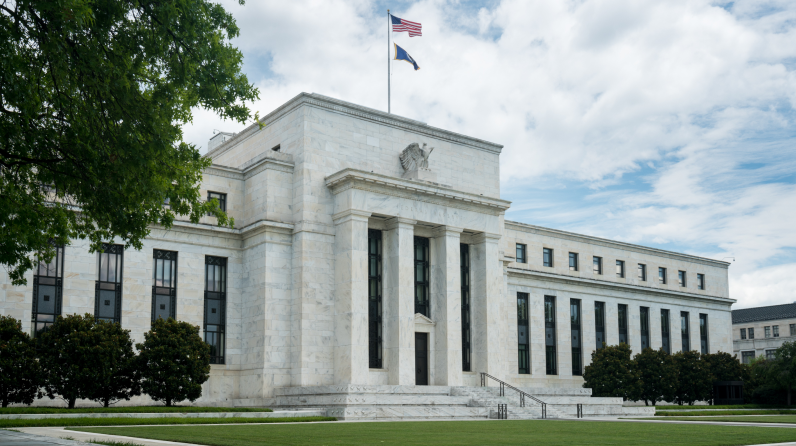
Equities are poised to close the week on a positive note; today’s report is contributing to the recovery following a choppy July. The weak jobs report should take some pressure off the Fed following their hotly contested decision to hold rates steady in last week’s meeting, and bond markets reflected the softer report, as the probability of a Fed rate hike in September fell to 44% from 58%. However, the relief could prove short-lived, as the emphasis of the FOMC right now is clearly on inflation. With two CPI reports still to come ahead of the September meeting, expectations could shift meaningfully between now and then. As Fed Chair Kevin Warsh pushes back on providing forward guidance, the annual Jackson Hole Economic Policy Symposium, scheduled for August 27-28, could play an even more important role in terms of evaluating the stance of different members of the Committee following July’s data in totality.
While we concede that inflation remains above the Fed’s reiterated target of 2%, we maintain our view that the disinflationary trend in services and shelter can persist through the back half of 2026. As such, we see continued opportunity to pivot portfolios from cash into modestly longer duration positions at attractive yields. Equities could remain volatile as attention shifts to macroeconomic, policy, and political concerns; with earnings season ending, reaction to unexpected events in those areas could outweigh the fundamentals, at least in the short-term. We remain overweight in global equities and will use volatility to allocate fully to our highest conviction ideas; we are also focused on identifying disconnects between our views and the fixed income markets as potential opportunities in both duration and credit positions.




IMPORTANT INFORMATION:
This material is provided for informational purposes only and nothing herein constitutes investment, legal, accounting or tax advice, or a recommendation to buy, sell or hold a security. This material is general in nature and is not directed to any category of investors and should not be regarded as individualized, a recommendation, investment advice or a suggestion to engage in or refrain from any investment-related course of action. Any views or opinions expressed may not reflect those of the firm as a whole. Neuberger products and services may not be available in all jurisdictions or to all client types. Diversification does not guarantee profit or protect against loss in declining markets. Investing entails risks, including possible loss of principal. Investments in private equity are speculative and involve a higher degree of risk than more traditional investments. Investments in private equity are intended for sophisticated investors only. Unless otherwise indicated, returns shown reflect reinvestment of dividends and distributions. Indexes are unmanaged and are not available for direct investment. Investing entails risks, including possible loss of principal. Past performance is no guarantee of future results.
Portfolio positioning views expressed herein are those of Neuberger’s Wealth Investment Group, which may include those of the Neuberger’s Asset Allocation Committee. Asset allocation and positioning views are based on a hypothetical reference portfolio. The Wealth Investment Group analyzes market and economic indicators to develop asset allocation strategies. The Wealth Investment Group works in partnership with the Office of the CIO. The Wealth Investment Group also consults regularly with portfolio managers and investment officers across the firm. The Asset Allocation Committee is comprised of professionals across multiple disciplines, including equity and fixed income strategists and portfolio managers. The Asset Allocation Committee reviews and sets long-term asset allocation models, establishes preferred near-term tactical asset class allocations and, upon request, reviews asset allocations for large, diversified mandates. Asset Allocation Committee members are polled on asset classes and the positional views are representative of an Asset Allocation Committee consensus. The views of the Asset Allocation Committee and the Wealth Investment Group may not reflect the views of the firm as a whole and Neuberger advisers and portfolio managers may take contrary positions to the views of the Asset Allocation Committee or the Wealth Investment Group. The Asset Allocation Committee and the Wealth Investment Group views do not constitute a prediction or projection of future events or future market behavior. Defensive positioning generally means an underweight bias on allocations to risk assets such as equities and alternatives. Positioning views may change over time without notice and actual client positioning may vary significantly. Discussion of yield characteristics or total returns of different asset classes are for illustrative purposes only. Such asset classes, such as equities and fixed income, may have significantly different overall risk-return characteristics which should be consider before investing.
The information in this material may contain projections, market outlooks or other forward-looking statements regarding future events, including economic, asset class and market outlooks or expectations, and is only current as of the date indicated. There is no assurance that such events, outlook and expectations will be achieved, and actual results may be significantly different than that shown here. The duration and characteristics of past market/economic cycles and market behavior, including any bull/bear markets, is no indication of the duration and characteristics of any current or future be market/economic cycles or behavior. Information on historical observations about asset or sub-asset classes is not intended to represent or predict future events. Historical trends do not imply, forecast or guarantee future results. Information is based on current views and market conditions, which will fluctuate and may be superseded by subsequent market events or for other reasons.
Discussions of any specific sectors and companies are for informational purposes only. This material is not intended as a formal research report and should not be relied upon as a basis for making an investment decision. The firm, its employees and advisory accounts may hold positions of any companies discussed. Nothing herein constitutes a recommendation to buy, sell or hold a security. It should not be assumed that any investments in securities, companies, sectors or markets identified and described were or will be profitable. Investment decisions and the appropriateness of this content should be made based on an investor's individual objectives and circumstances and in consultation with his or her advisors.
Neuberger Investment Advisers LLC is a registered investment adviser.
The “Neuberger” name and logo are registered service marks of Neuberger Berman Group LLC.